Most corporate-startup matchmaking fails. The pitch day goes well, everyone exchanges contacts, and six months later, nothing has moved.
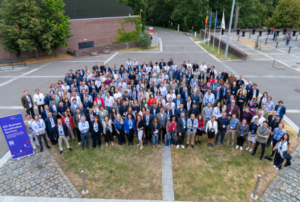
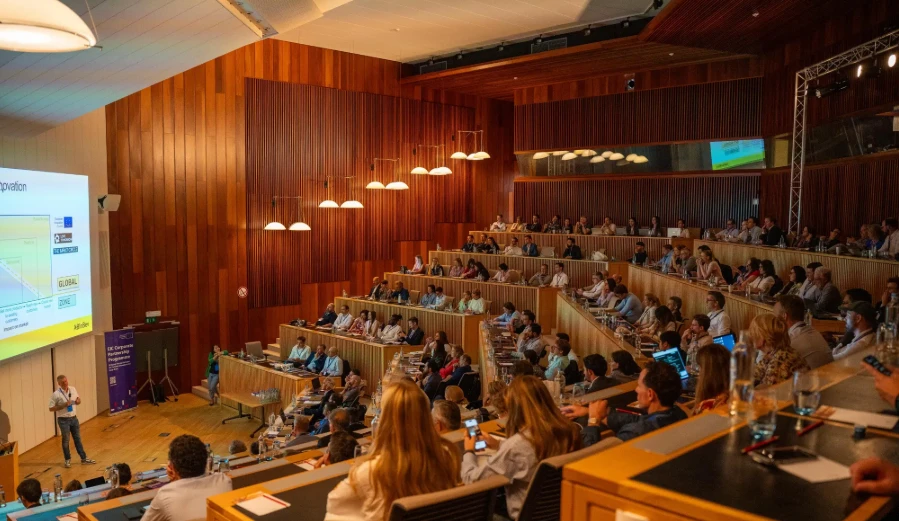
For the past two and a half years, Dealflow.eu has worked on the EIC Corporate Partnership Programme for the European Innovation Council, bringing EIC-backed deeptech startups face to face with Europe’s largest corporations around challenges they actually need solved. Partners ranged from Siemens, P&G, Ferrovial, Vodafone and The Coca-Cola Company to the Japan External Trade Organization (JETRO)’s network of Japanese companies, with activities from Lisbon to Bucharest to Tokyo. The programme has now reached 100 activities in total, 34 of which we have led. We have analysed the learnings from all of them.
Not everything worked the first time. Some formats didn’t work out, and some of our own assumptions turned out to be wrong. That is exactly why the lessons are worth sharing. The five lessons below draw on all 100 activities.
100 corporate days with the EIC: five lessons from the field
1. Preparation matters as much as the day itself
Preparation is what differentiates a Corporate Day from a networking event. The pitches and meetings are only the visible part. The outcome is largely decided in the weeks before.
The biggest factor is the startup’s ask. Startups that arrive with a concrete proposal (a proof of concept, a pilot, a defined use case) have much higher chances of success. The corporate doesn’t have to look for a match and use case for them, so the conversation is targeted from the first minute and moves quickly to next steps.
Two things help startups get there:
- A useful reverse pitch. When the corporate explains its challenges, how it runs pilots and what happened to past collaborations, startups can shape their proposal to real needs instead of guessing.
- NDAs signed before the activity. With confidentiality settled in advance, one-to-one meetings go straight to technical and commercial substance instead of stopping at the surface.
2. How to keep momentum
A good meeting is not a deal. A deal with a corporate is a process with several steps: an NDA, technical deep dives, internal approvals, a pilot, a budget, and only then a contract. Each step involves new people and resources on the corporate side.
That takes time. Some of the most successful collaborations from the programme took twelve months or more to materialise.
Here is how to keep momentum:
- Keep continuous touch points with the corporate: a debrief right after the activity, then check-ins at three and six months, and beyond.
- Provide deal maker support to the startup: help founders navigate each step on the corporate side, from the NDA to the pilot, so the process keeps moving.
- Measure over the right timeframe. A snapshot six months after the activity captures something that is still growing.
Our very first Corporate Day, with Galp in Lisbon, led to pilots that Galp and EDP have since published as success stories. It didn’t happen on the day, but it started there.
3. Cross-pollination makes innovation grow
Some of our most productive activities brought several corporations into the same room. The Impact Circle is the clearest example: multiple innovation teams, multiple challenges, and one shared pool of startups.
The value works on three levels:
- Shared deal flow. A startup selected by one corporate is often relevant to another. Corporates benefit from each other’s scouting.
- Shared practice. Innovation teams compare how they run pilots, structure partnerships and get buy-in internally, and learn from peers facing the same problems.
- More doors for startups. Founders meet several potential partners in a day, and often the most promising conversation is one they didn’t plan for. Startups regularly left with more meetings than they arrived with.
Cross-cutting topics, such as physical AI or new materials, work especially well. One technology can solve problems in industries that rarely talk to each other.
4. European deeptech is in demand worldwide
Europe’s research and innovation funding is producing startups that are hard to find anywhere else: deeptech companies built on years of R&D, with applications far beyond their original market.
Our work with JETRO showed how strong the demand is. Japanese corporations brought challenges that matched the EIC deeptech portfolio closely, especially on industrial technologies. The first edition in Tokyo produced a wave of NDAs between European startups and Japanese corporations, and its results led directly to JETRO joining the 2026 Impact Circle and a second edition of the Corporate Day in Japan, where more than 60 one-to-one meetings took place in a single day.
Cross-border collaboration has its own rhythm. Japanese corporations prepare well in advance, expect tailored material ahead of time, and move carefully through confidentiality steps. Longer preparation and cultural coaching for founders make the difference. But the lesson is clear: European startups don’t only need European customers. The world is looking for them.
5. The right people in the room beat a bigger room
Inviting as many startups as possible to pitch may generate plenty of applications, but also many weak matches. What works better is a curated shortlist of startups matched to each challenge, validated by the corporate before the call opens, with a short written reason for every company selected. Smaller cohorts, better conversion.
On the corporate side, the biggest success factor is simple: bringing the challenge owners into the one-to-one meetings. The innovation team is the bridge, but the people who decide are the technical experts who own the problem and the budget. When they sit across the table from a startup, conversations turn into concrete next steps, and those next steps turn into deals. The best innovation teams we worked with saw their role exactly that way: opening the door, then bringing the business units through it.
What this means in practice
If you are a corporate innovation team:
- Bring the challenge owners, the technical experts who own the problem and the budget, into the one-to-one meetings.
- Define challenges with the business units, not just for them.
- Choose a few well-matched startups over a long list, and write down why you picked each one.
- Tell startups how you actually run pilots and fund them, not just what your strategy is.
- Sign NDAs before the activity, and plan follow-up for at least a year after it.
If you are a startup:
- Apply where the challenge fits your technology, not wherever there is a pitch slot.
- Arrive with a precise ask: the pilot, proof of concept or agreement you want next.
- Treat the NDA as the start of the work, and keep following up long after the activity.
- Say yes to multi-corporate and international formats. Your best partner may be one you didn’t expect.
The real lesson
Scaling open innovation is not about running more activities. It is about reproducing the conditions under which deals close: committed corporates, well-matched startups, prepared conversations and patient follow-up.
The turning point in our programmes came when all of those practices were in place at once. From then on, the pipeline grew steadily. Those conditions are now known, documented and repeatable, and that may be the most valuable result of all.
Ready to work with Europe’s best deeptech startups? Whether you want to launch a corporate challenge, join a future Corporate Day, or design your own open-innovation programme, get in touch with us or explore the challenges open on our matchmaking platform.